
Meta Ads management
Meta Ads management built around measurable customer acquisition.
TechneKaizen plans, builds and manages Meta advertising across Facebook and Instagram, connecting the audience, creative, landing experience and measurement so campaigns can be judged against meaningful business outcomes.
The service is available to businesses in London and across the UK, whether you need a new campaign, a clearer testing plan or a more useful view of an existing account.
Facebook + Instagram
- 01Audience
- 02Creative
- 03Destination
- 04Measurement
What good management connects
The campaign cannot be separated from the offer or the customer journey.
A campaign can generate activity and still underperform commercially. We look at the full route from first impression to landing page, form or checkout, then use the available data to decide what deserves more budget and what needs to change.
- 01
Offer and objective
Define the customer action the campaign should support and the commercial reason it matters.
- 02
Creative testing
Develop clear test questions around the hook, message, format and proof instead of changing everything at once.
- 03
Campaign management
Build, monitor and optimise Facebook and Instagram campaigns around budget, audience, placement and performance.
- 04
Measurement
Connect platform reporting with landing-page and store or lead data so decisions are not based on clicks alone.
Paid social evidence
Real campaign data, not hypothetical media plans.
This ecommerce campaign shows how we assess paid social beyond surface-level clicks: delivery cost, click behaviour, purchase reporting, geography and the traffic that reaches the website all matter when deciding what to test, scale or stop.
Owner-provided context places the management takeover around 5 April 2024. The reporting view below covers 1 April to 4 June 2024 and is not presented as a before-and-after causation claim.
- Ad spend
- £542.53
- Link clicks
- 1,572
- CTR (all)
- 3.21%
- Purchase ROAS
- 1.05
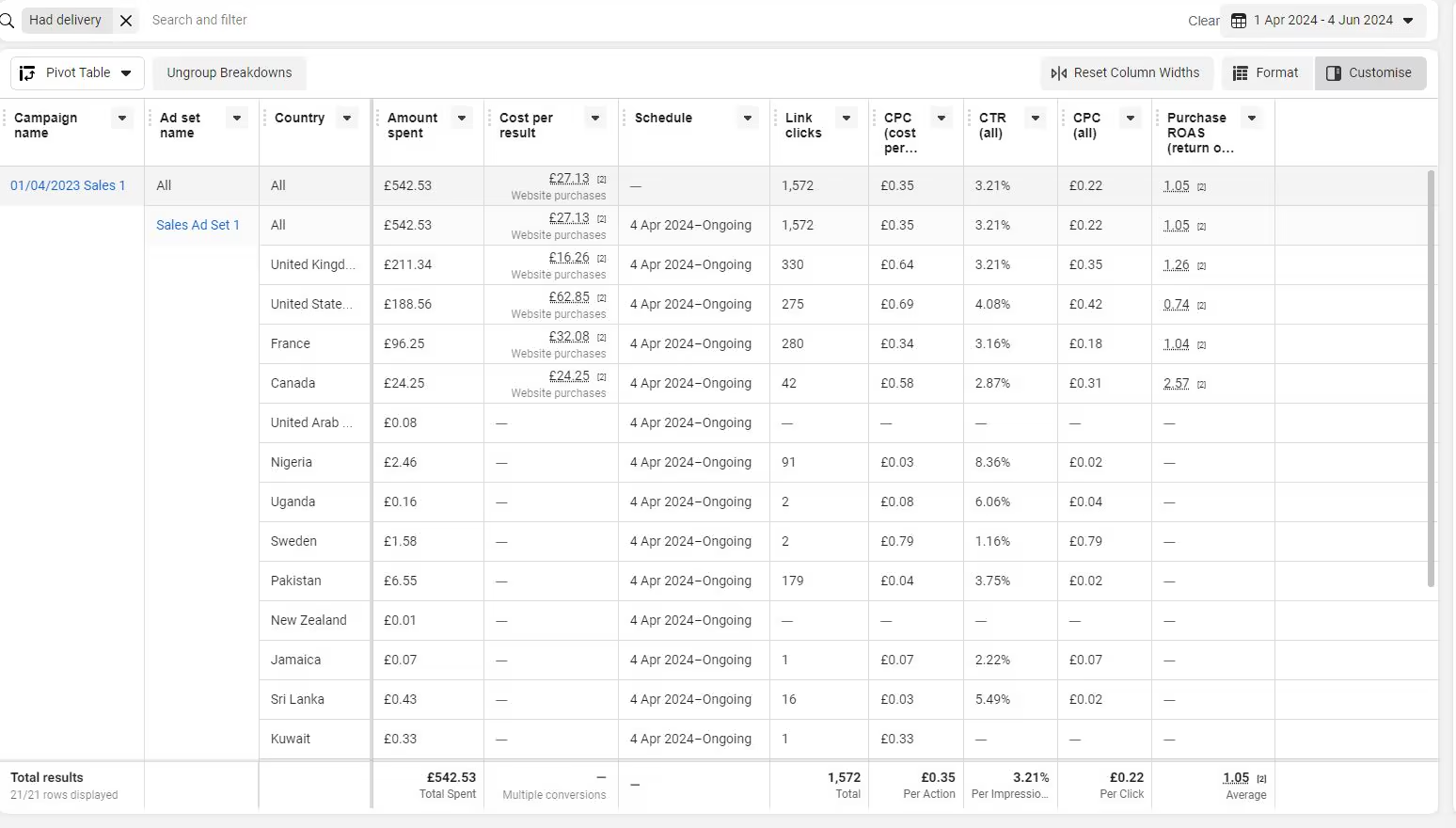
Geographic optimisation
The same campaign did not perform equally in every market.
The reporting view showed meaningful differences by country. That gives a concrete reason to reconsider budget allocation rather than assuming every market deserves equal spend.
Country figures are reported samples from the displayed view; they do not establish statistical certainty or predict future returns.
Website traffic corroboration
Paid traffic has to survive the click.
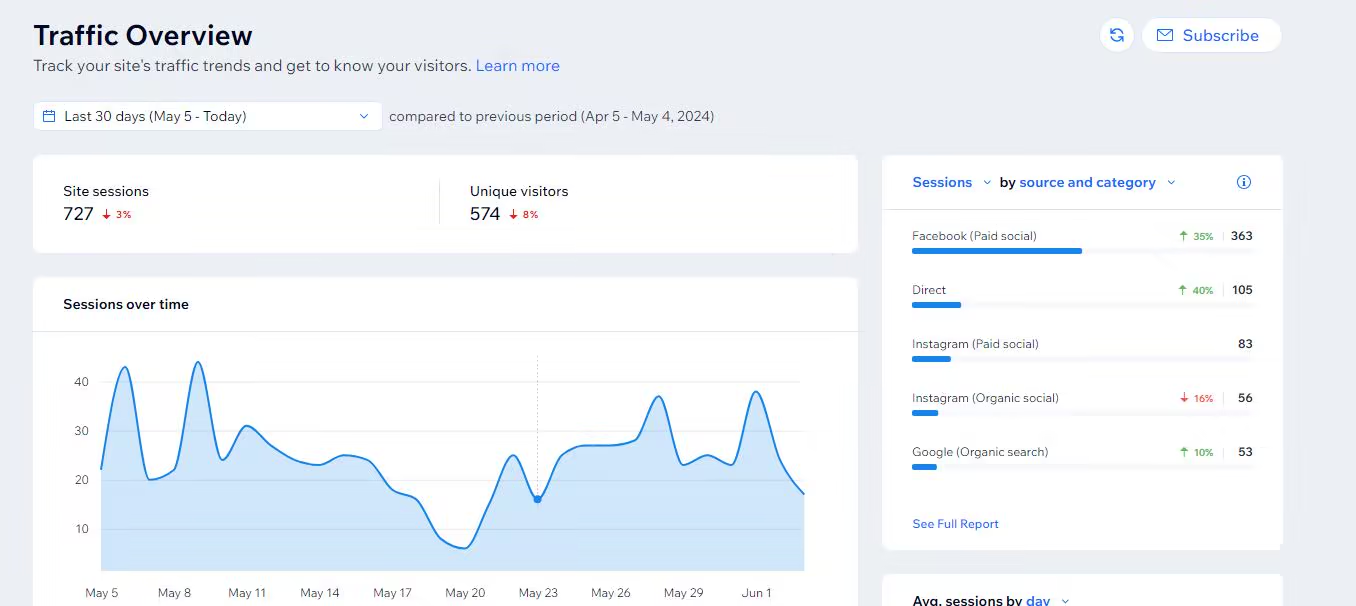
Website analytics were reviewed alongside Ads Manager to understand whether traffic was reaching the destination. In the recorded last-30-days view, Facebook paid social was the largest listed website traffic source.
- Site sessions
- 727
- Facebook paid-social sessions
- 363
- Instagram paid-social sessions
- 83
Audience strategy
Audience decisions should start with the customer, not a list of interests.
The strongest audience plan is grounded in the offer, customer journey, geography and available first-party signals. Audience and measurement choices must respect consent and the data the business is actually entitled to use.
- 01
Prospecting
Who should encounter the offer, what customer context matters and which geography is commercially realistic?
- 02
Retargeting
When is another impression genuinely useful, and does the audience have enough volume and consented data to support it?
- 03
Exclusions
Who should not keep seeing the campaign, including existing customers or audiences outside the offer, location or buying stage?
Service scope
What Meta Ads management can include.
The exact combination depends on the account, campaign stage and work your team already covers. The proposal confirms what TechneKaizen will deliver and whether creative production or substantial landing-page work needs separate scope.
- 01
Account and campaign review
Review account structure, active campaigns, access, billing ownership and available performance history.
- 02
Campaign strategy
Define the objective, offer, funnel role, test question and budget approach.
- 03
Audience planning
Plan prospecting, retargeting and exclusions around the customer and available data.
- 04
Creative testing
Set the angles, formats and comparisons needed to learn what earns attention and action.
- 05
Campaign build
Configure Facebook and Instagram campaigns, ad sets, ads, placements and conversion location.
- 06
Landing-page alignment
Review whether the destination continues the promise and removes avoidable friction.
- 07
Pixel and event review
Check the events used for optimisation and reporting against the customer journey.
- 08
Browser and server-side measurement
Configure Meta Pixel and Conversions API where appropriate to the agreed project and consent setup.
- 09
Budget testing
Use bounded budgets and planned review points rather than treating spend as a forecast of sales.
- 10
Performance analysis
Read delivery, engagement, conversion and business data together.
- 11
Campaign optimisation
Adjust creative, audience, placement and budget according to the strongest available signals.
- 12
Reporting
Explain what changed, what the data shows and what should happen next.
Campaign process
Structure the campaign around the decision it needs to support.
A cleaner account is useful only when it makes the work easier to manage and the results easier to interpret.
- 01
Define the commercial objective.
Choose the business action the campaign should support and how it will be evaluated.
- 02
Choose the right conversion event.
Optimise towards the most useful event that can be measured reliably.
- 03
Build around the test question.
Align the audience, creative, placement and destination with one clear learning goal.
- 04
Set a bounded budget.
Agree the exposure, timing and review point before the campaign launches.
- 05
Review the full evidence.
Compare delivery, creative, audience, placement, website and conversion signals.
- 06
Scale, change or stop.
Move budget only when the results provide a credible reason to do so.
Landing-page alignment
The ad and the landing page have to make the same promise.
A strong campaign can still fail when the destination is slow, confusing or asks the visitor to make a different decision from the ad. We review the journey from impression through to landing page, form or checkout.
When the destination needs substantial work, explore Website Design, Website Redesign or Ecommerce Websites.
Measurement
Measure what matters to the business.
Not every metric deserves equal weight. The campaign objective determines which numbers should drive decisions.
- 01
Delivery
Reach, impressions and frequency explain how the campaign was served.
- 02
Engagement
Clicks, CTR and landing-page views show whether people responded and reached the destination.
- 03
Conversion
Leads, purchases and qualified actions show whether the journey produced the intended event.
- 04
Economics
CAC, contribution margin and ROAS matter where the attribution and underlying business data are reliable.
Browser and server-side measurement where appropriate.
Where the project requires it, browser and server-side events can be configured so campaign measurement is more resilient and duplicate events are controlled. Consent requirements still apply.
Choose the channel by buying behaviour
Meta Ads and Google Ads solve different demand problems.
Google Ads primarily captures existing search demand. Meta can create and intercept demand while people browse Facebook and Instagram. The right channel depends on how the customer buys and how much demand already exists.
Paid search is not part of the current TechneKaizen service range. Where search demand is the constraint, organic visibility work is the route we offer.
Compare SEOFounder oversight
Meta Ads strategy and implementation are overseen by Joshua Nimako, founder of TechneKaizen.
About Joshua and TechneKaizenFrequently asked questions
What businesses ask before starting Meta Ads management.
If your account or customer journey is unusual, the project discussion is the right place to resolve it.
How much should I spend on Meta Ads?
There is no universal starting budget. The offer, audience size, geography, conversion event, creative needs and cost of a meaningful test all affect the recommendation. Your proposal will set a bounded media budget separately from management fees.
Do Facebook Ads still work?
Facebook remains part of Meta’s advertising system alongside Instagram. Whether it is commercially useful for a particular business depends on the offer, audience, creative, destination and measurement—not the platform name alone.
How long does it take to test a campaign?
A useful test needs enough time and delivery to evaluate the agreed question. We set review points around the budget and conversion cycle rather than promise that every campaign will become clear after a fixed number of days.
Can you guarantee ROAS?
Advertising results vary by offer, market, creative, budget and destination. We do not guarantee a fixed ROAS, lead cost or sales volume.
Do I need new creatives?
Often, yes. Existing assets can be reviewed first, but Meta campaigns need creative that communicates quickly in the placements being used. Production volume and responsibility are confirmed in the project scope.
Do I need a landing page?
Not always. The right destination may be a focused landing page, product page, checkout, instant form or another suitable route. It must continue the ad’s promise and support the intended customer action.
What is Meta Pixel?
Meta Pixel is browser-based code that can report selected website events to support campaign optimisation and measurement, subject to the site’s consent and data setup.
Do I need Conversions API?
Not every project needs it. Conversions API can add a server-side route for agreed events and improve measurement resilience, but implementation, deduplication and consent still need to be handled correctly.
Can you run Instagram Ads too?
Yes. Instagram placements are managed through Meta Ads Manager alongside Facebook placements, with creative and placement decisions based on the campaign and audience.
How do you measure results?
We use the furthest reliable business outcome available, then read platform delivery, website behaviour and lead or store data together. The reporting source and attribution limits are stated so a platform metric is not mistaken for total business revenue.
Start with the commercial objective
Ready to build a clearer Meta Ads acquisition system?
Tell us what you sell, who you need to reach, what has already been tried and which customer outcome matters. We will use that context to define the right starting scope.